Dreaming of a La Quinta home that lives as beautifully outside as it does inside? In a desert climate where summer days often top 100°F and rain is scarce, the right plan can mean cool shade at noon, glowing sunsets on the patio, and water-wise features that stand out to luxury buyers. In this guide, you’ll learn climate-smart moves that boost comfort, conserve water, and elevate resale appeal. Let’s dive in.
Why climate-smart design matters in La Quinta
La Quinta sits in a hot desert environment with very low annual rainfall, roughly 3 inches per year. Regional water management and conservation shape how you should landscape and maintain outdoor spaces. The Coachella Valley Water District focuses on groundwater replenishment and outdoor water savings, which affects everything from turf choices to irrigation controls. You can explore that local context through the district’s overview of groundwater and imported water management.
Summer brings many days above 90°F, with frequent triple digits and very strong sun. Nights are often cooler, which is helpful for night ventilation strategies. For a quick snapshot of seasonal temperatures and humidity patterns, review La Quinta’s climate profile as you plan.
Plan orientation and shade first
Smart shade is your first line of defense against heat. Reduce direct sun on the building and outdoor rooms, especially on east and west exposures where the sun sits low in the sky.
Tame east and west sun
- Prioritize vertical or layered shading for east and west walls and patios. Screens, louvers, and landscape windbreaks help cut glare and radiant heat.
- Limit large, unshaded glazing on west-facing walls. If you love big views, combine glass with deep shade and high-performance glazing.
- Size shading by orientation. The Building America guide to shading and solar control offers helpful rules of thumb.
Right-sized overhangs on south glass
- Use deeper horizontal overhangs on south-facing windows to block high summer sun while allowing lower winter sun.
- Aim for continuous shade over outdoor seating zones so they stay usable through the hottest parts of the day.
Create year-round outdoor rooms
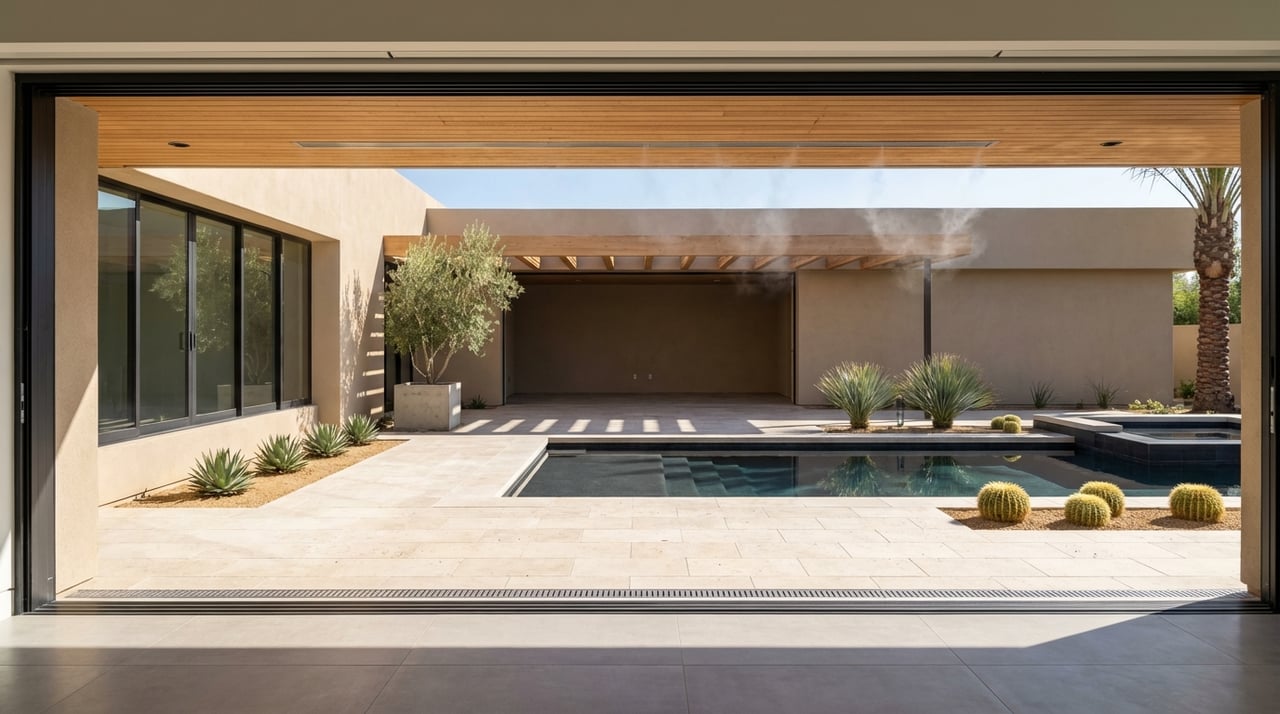
Covered, ventilated outdoor rooms bring resort living home. High ceilings, ceiling fans, and cross-breezes transform midday heat into afternoon comfort.
- Extend roof protection to form a true “California room,” not just an umbrella over a table.
- Prewire for motorized screens, heaters, and lighting so you can fine-tune comfort in every season.
- Detail thresholds for drainage and weatherproofing so interiors stay dry and seamless.
- Patios and covered rooms are in demand across new-home trends. Industry coverage shows buyers increasingly expect outdoor living as an extension of the interior, especially in warm climates with scenic backdrops.
Doors and glazing that connect without overheating
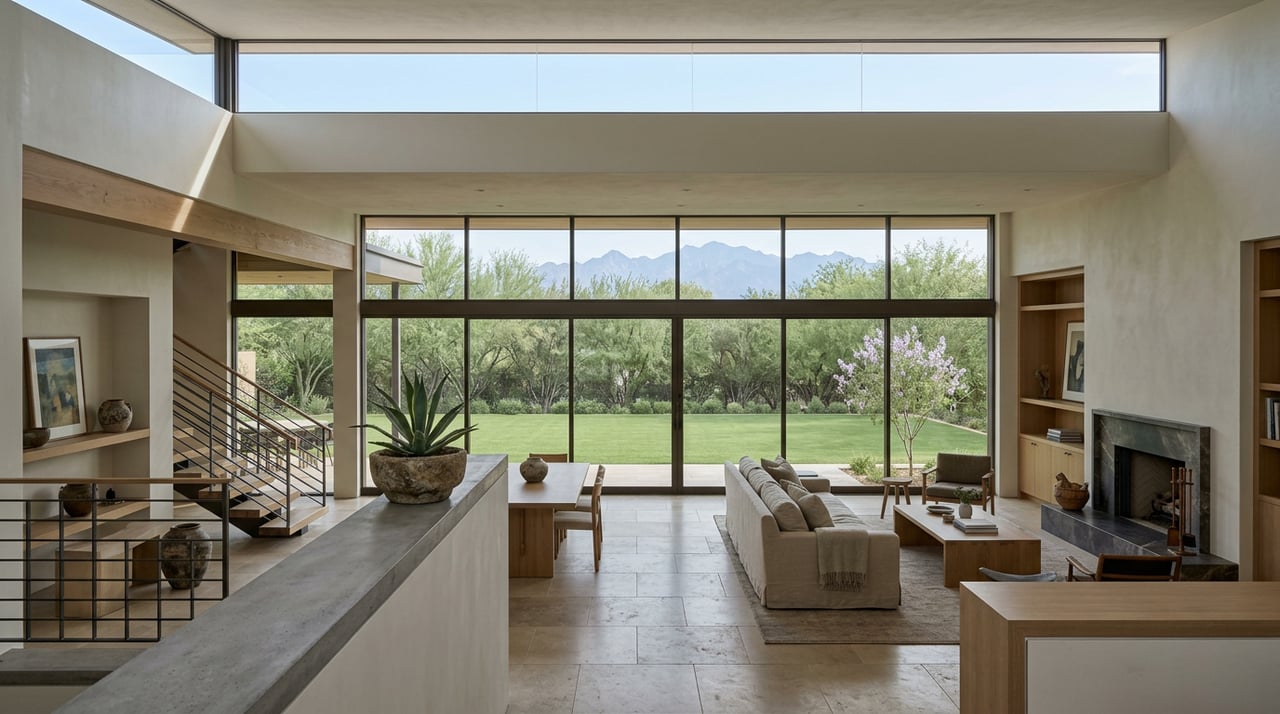
Large sliders and multi-panel stacking doors make the indoors flow to patios and views. In the desert, focus on thermal performance and solar control.
- Choose thermally broken frames and glass with the right U-factor and solar heat gain coefficient (SHGC) for our climate.
- Combine high-performance glass with planned shading. Managing sun at the source is more effective than relying on glass alone. See the shading and solar control guidance to align glazing with shade.
- Integrate insect screens and robust locking for comfort and security.
Smarter cooling strategies outdoors
You can boost comfort significantly with passive moves, then add simple technology for peak summer afternoons.
Use thermal mass and night flushing
Tile floors, stone patios, and masonry can absorb heat by day and release it at night. When evenings are cooler, plan to vent the home and outdoor rooms so stored heat escapes and interiors start the day cooler. High-mass strategies are well documented for hot-dry climates; explore the research on passive cooling and night-flush approaches in this building-science overview.
Treat misting as a supplement, not a cure-all
Misting systems can create a quick cooling effect in our dry air, but they perform best when paired with shade and light wind control. Recent research shows that combining shade and misting improves perceived comfort more than misting alone. If you install a mist system, use filtration, high-pressure nozzles, and timers to target the hottest hours, and design for easy maintenance. For context on the shade-plus-mist synergy, see the latest urban-heat study.
Pools that conserve water and boost appeal
A pool is often the centerpiece of La Quinta living. Design it for comfort, beauty, and conservation.
Evaporation is the main leak
In arid regions, wind and surface area drive substantial water loss. Placing the pool closer to the house, adding windbreaks, and providing partial shade can reduce loss meaningfully. For a practical sense of how fast water can leave an exposed pool, review this evaporation reference.
Cover it to save 70 to 95 percent
Pool covers are the single most effective way to curb evaporation. Depending on type, realistic savings commonly fall between 70 and 95 percent. If you add solar heating, pair it with a cover to lock in heat and reduce loss.
Place, plant, and power wisely
- Use low, narrow shapes and wind buffers where design allows to reduce surface exposure.
- Specify a variable-speed pump and efficient filtration to lower energy use.
- Check the Coachella Valley Water District’s residential rebates for turf conversion and smart irrigation. Water-wise choices are a plus for both operating costs and resale narratives.
Materials and finishes that last in desert sun
Choose finishes that can handle UV, heat, and occasional splash while feeling cool underfoot.
- Roofs: Light-colored or cool-roof assemblies can reduce heat gain. Confirm your property’s Title 24 climate zone as you plan assemblies using the California climate zone finder.
- Floors: Porcelain pavers, natural stone, and finished concrete balance durability with thermal mass. Avoid very dark tones in full sun unless shaded. See this research summary on mass and materials in hot-dry climates.
- Composites and wood: Many composites perform well but can heat up in direct sun. Favor light tones, UV-stable products, and shade in high-traffic zones.
- Metals and appliances: Around pools and irrigation, specify corrosion-resistant finishes and plan for periodic upkeep under intense UV.
Permits, rebates, and HOA rules
Get the paperwork right early. It keeps your timeline smooth and protects value at resale.
City approvals
The City of La Quinta requires permits for many exterior structures, pools and spas, and fixed gas or electrical work. Start with the city’s resources and online portal at the City of La Quinta, and consult the Fire Marshal when adding fixed-fuel fire features or outdoor kitchens.
Water-smart rebates
CVWD offers turf conversion rebates, smart irrigation controller programs, and other outdoor conservation incentives. Many require pre-approval and, if applicable, HOA sign-off. Review current CVWD residential rebates before you start work.
Gas, electrical, and fire safety
Built-in grills and permanent appliances must meet fuel gas and fire safety codes. Hire licensed contractors and follow clearance and ventilation rules. For an overview of best practices, see this summary of NFPA-aligned grilling safety considerations.
HOA and country-club review
If you live in a gated or golf community, plan for architectural review and design guidelines on colors, structures, and landscape. Secure approvals before ordering materials.
Quick project roadmap
- Map sun and wind on your lot, then place outdoor rooms away from harsh west sun where possible. Use the shading and solar control guide to size overhangs and choose devices.
- Prioritize shading and high-performance glazing before adding active cooling outdoors.
- If you add misting, pair it with shade and wind control, and use filtration and timers. See the shade-plus-mist research for context.
- For pools, plan windbreaks and a usable cover, and understand local evaporation realities with this evaporation chart.
- Submit CVWD rebate pre-approvals early and keep HOA sign-offs on file. Review current rebate details.
- Confirm your Title 24 climate zone to align materials and assemblies using the climate zone finder.
Resale perspective for La Quinta luxury buyers
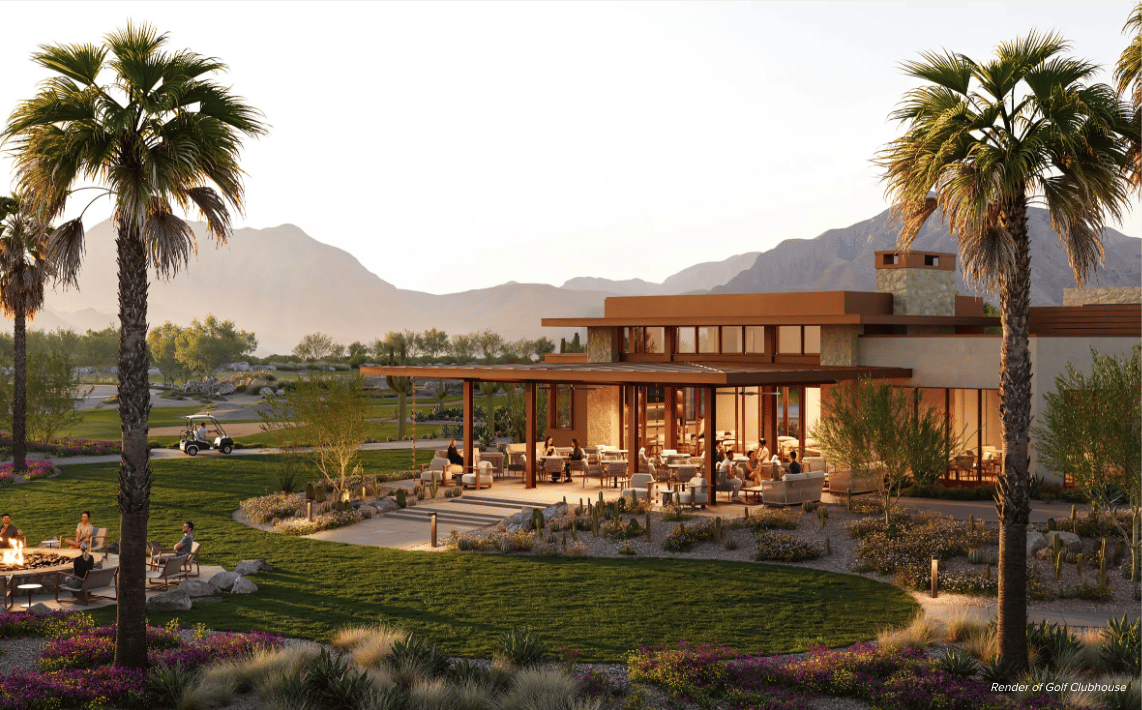
Luxury buyers in La Quinta prize outdoor rooms that feel like part of the home, with covered seating, integrated kitchens, pools, and fire features. Broader market coverage shows a steady rise in homes built with patios and porches, reflecting demand for seamless indoor-outdoor living in warm markets. These amenities resonate in golf and resort communities where the landscape and views are part of the lifestyle.
From a seller’s standpoint, focus on durable, low-maintenance surfaces, robust shade, and flexible spaces that photograph beautifully and live well in every season. Document water- and energy-saving improvements, including pool covers and irrigation upgrades, and include permit records. Clear records help buyers understand operating costs and boost confidence at the offer stage.
Bring it all together
When you plan for shade, airflow, materials, and water from the start, your La Quinta home will feel cooler, look sharper, and live larger. Done well, indoor-outdoor design creates the resort experience buyers look for while keeping maintenance and utility costs in check.
Ready to tailor these ideas to your property or evaluate upgrades before listing? Schedule a private, design-forward strategy session with Tyson Hawley.
FAQs
What indoor-outdoor features add the most value in La Quinta?
- Covered outdoor rooms with fans, a pool with a usable cover, and a well-planned outdoor kitchen are top draws for luxury buyers because they extend living space and photography appeal.
How can you reduce pool evaporation in the desert?
- Use a pool cover, add windbreaks and strategic shade, and consider a compact shape near the house. See this evaporation guide for context.
Which door systems work best for hot, sunny climates?
- Large sliders or stacking doors with thermally broken frames, low SHGC glass, and layered shading perform well while preserving views and comfort.
Are misting systems worth it in La Quinta?
- Yes, as a supplement. They work best under shade with light wind control and should use filtration and timers for efficient, targeted cooling.
Do you need permits for outdoor kitchens and patio covers in La Quinta?
- Often yes. Check the City of La Quinta for permit triggers, and follow fire and fuel gas safety rules for built-in appliances.
What materials stay coolest underfoot on patios?
- Porcelain pavers, natural stone, and finished concrete in lighter tones stay more comfortable in sun and offer durability with thermal mass benefits.